

In the vast world of digital marketing, mastering lead generation can often seem like an insurmountable task. It requires the perfect blend of strategic planning, compelling content creation and effective marketing tactics.
This article aims to guide you through the process of generating leads using content marketing and blogging, providing you with a roadmap to success.
Understanding lead generation
What is lead generation?
Lead generation encompasses a range of tactics, from content marketing and SEO to social media campaigns and email marketing, each designed to engage and intrigue your target audience. This multi-faceted approach allows businesses to cast a wider net, capturing leads at different stages of the buyer's journey.
By providing valuable information, solving problems and proposing solutions that meet the needs and interests of potential customers, companies can create a climate of trust and credibility. This trust helps to build stronger relationships with potential customers, which significantly increases the chances of conversion.
Lead generation techniques are evolving with the digital landscape, forcing businesses to innovate and adapt to new platforms and consumer behaviours in order to remain competitive and effectively develop their customer base.
This article will help you to’Find out more on generating leads using AI.
The importance of lead generation for businesses
Lead generation is a fundamental aspect of any business. It enables you to reach your target audience, get them interested in your brand and convert them into loyal customers. Without it, attracting new customers and developing your business can be a difficult task.
Lead generation is the backbone of business expansion and success. Not only does it enable you to identify your ideal customers and make contact with them, it also paves the way for building solid relationships with them through strategic engagement.
This is where the art of lead generation comes in, combining creativity and strategy to capture the interest of potential customers and guide them through the’sales funnel. One of the essential tools in this process is the lead magnet - an attractive offer designed to encourage your audience to provide their contact details.
Whether it's an informative e-book, a free trial or exclusive access to webinars, an effective lead magnet is the key to successful lead generation. By mastering these elements, businesses can develop an effective lead generation strategy that converts Internet users into buyers and promotes long-term customer loyalty.
The role of content and blogs in generating leads
Why use content and blogs?
In the digital age, content is king. Through content marketing and blogging, you can establish your brand as an authority in your sector, answer your audience's questions and solve their problems. This not only increases website traffic, but also generates leads by providing value to your audience.
Types of content for lead generation
To choose the right type of content for lead generation, you need to understand your audience's preferences and align them with your business objectives.
Blog posts offer a versatile platform for sharing ideas, updates and industry information, effectively promoting SEO and attracting readers. E-books and white papers provide in-depth analysis or comprehensive guides, positioning your brand as a thought leader while capturing leads through downloads.
Infographics translate complex data into visually appealing and digestible formats, ideal for social sharing and quick consumption. Videos and podcasts appeal to audiences who prefer dynamic or auditory content, reinforcing the personality and reach of the brand. Webinars offer an interactive way to delve deeper into topics, build expertise and encourage participant engagement.
Using these different types of content allows companies to address different segments of their audience, maximising lead generation efforts across multiple channels.
- Blog posts : Promote referencing, engage readers with topical information.
- E-books : Provide in-depth analysis, establish thought leadership.
- White papers : Provide detailed guides, capture leads through downloads.
- Infographics : Present data visually, improve social sharing.
- Videos : Engage dynamically, highlighting the brand's personality.
- Podcasts : Aimed at auditory learners, they broaden the scope of the content.
- Webinars : offer in-depth interactive content, encouraging real-time engagement.
Develop an effective lead generation strategy
Identifying the target audience
To optimise your lead generation strategy effectively, it's vital to acquire in-depth knowledge of your potential prospects. This means not just knowing who they are on the surface, but also delving into their behaviour, preferences and online habits.
With this in-depth knowledge, you can tailor your content strategy not only to meet their needs, but also to address their issues directly, maximising each prospect's potential. This personalised approach ensures that your content resonates more deeply with your audience, increasing the likelihood of engagement and conversion.
What's more, by aligning your content with the specific interests and needs of your target audience, you refine the process of attracting the right prospects, those who are most likely to benefit from your product or service and become loyal customers.
Successful lead generation depends largely on your ability to harness this detailed understanding of your audience to create highly targeted and relevant content. By optimising your content for both search engines and your ideal customers, you bridge the gap between your business and the individuals who are most likely to engage with it.
This strategic alignment between your content strategy and your audience's expectations not only improves your brand's visibility, but also positions you as a trusted authority in your field.
So, by optimising your lead generation efforts in this way, you're not only attracting more qualified leads, you're also paving the way for a more effective nurturing process, guiding potential leads through the sales funnel with content that addresses their specific needs and concerns at every stage.
Creating a content strategy
An effective content strategy goes beyond simple planning; it's about execution and measurement, ensuring that each piece of content serves a specific purpose within your overall business objectives. It involves meticulously analysing the behaviour and preferences of your target audience, optimising content types and channels accordingly.
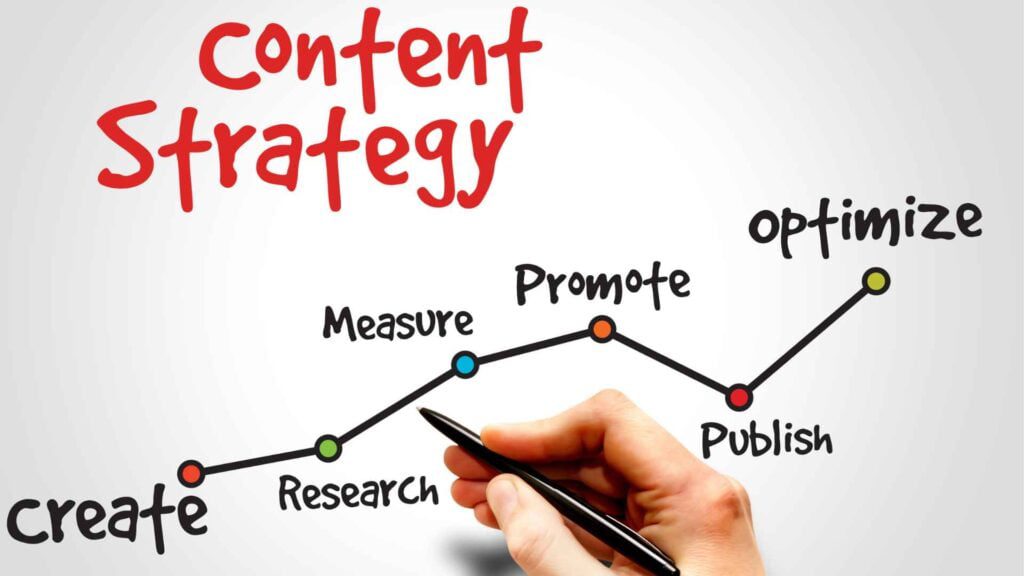
Publication schedules should be strategic and aim for maximum engagement, while promotional efforts should leverage SEO, social media and email marketing to extend reach.
This approach ensures that your content doesn't just attract attention, but retains it, which in turn promotes conversions and customer loyalty.
Optimising referencing for better visibility
Optimising your website for search engine optimisation (SEO) is a powerful lead generation tool that starts with in-depth keyword research to identify the terms and phrases your target audience is looking for. This fundamental step informs not only the content you create, but also the way you structure your landing page and your website. An SEO-optimised landing page, designed to be both informative and easy to navigate, greatly enhances the user experience.
By incorporating targeted keywords into your content, meta descriptions and even the structural elements of your website, you position your content to rank higher in search engine results pages. This strategic approach ensures that your valuable content reaches a wider audience, effectively leveraging platforms such as Google Ads to complement your organic search efforts.
Unlike other forms of marketing, SEO offers a unique opportunity to share valuable content directly with those who are actively seeking it, making it crucial for lead generation.
By aligning your content with the search intentions of your audience, you not only attract more visitors, but also increase the likelihood of converting them into potential customers. In fact, the traffic generated by SEO is generally more targeted and more qualified, since it's made up of people who are already interested in the subjects you cover.
By constantly optimising your content and website for search engines, you're harnessing a powerful tool that not only improves your visibility, but also establishes your brand as a credible and authoritative source in your sector. Naturally attracting high-quality leads over time.
Lead Magnet: Leveraging social media for promotion
Social media channels offer an unrivalled opportunity to distribute valuable content to a wide range of potential customers. Platforms such as LinkedIn are particularly effective for B2B marketers, providing a professional context for sharing articles, case studies and industry information.
To make the most of these platforms, it's essential to create content that meets the needs and interests of your target audience. By writing messages that offer real added value, you position your brand as a thought leader in your industry. This not only enhances your brand's reputation, but also encourages users to engage with your content and, ultimately, visit your website.

As well as creating compelling written content, the visual appeal of your articles plays an important role in capturing the attention of your audience. High-quality images, infographics and videos can make your content stand out in a news feed on social media, increasing the likelihood of engagement and sharing.
This visual aspect should be an integral part of your marketing campaign and adapted to the preferred form of content on each social media platform. For example, short, engaging videos can work well on platforms like Instagram and Facebook, while infographics and informative articles are better suited to LinkedIn.
By adopting a multi-channel approach and varying your type of content, you can maximise your reach and effectiveness when it comes to generating leads via social media.
Effective techniques for generating leads through content and blogs
Creating high-quality, relevant content marketing
Relevant, high-quality content is the backbone of lead generation. It attracts your audience, engages them and encourages them to take action. Make sure your content is informative, useful and answers your audience's questions.
Use calls to action (CTA)
Understanding your target audience is key to designing calls to action that convert. By adapting your call for action to the specific interests and needs of your audience, you make your offer more relevant and attractive. This personalisation starts with a visually appealing landing page that clearly communicates the value of what you're offering, whether it's a detailed eBook, a newsletter or a consultancy service.
By creating lead magnets that offer real value in exchange for their contact details, you're not only increasing the likelihood of conversion, but you're also collecting leads that are more likely to engage with your brand over the long term. This strategy ensures that visitors to your website aren't just passing through, but are engaged and interested in what you have to say.
What's more, a compelling CTA is more than just a button on your landing page; it's a strategic tool for guiding potential customers through your marketing funnel. By making your CTAs clear, concise and visually appealing, you can effectively direct your audience to the desired action, converting leads with content into tangible results.
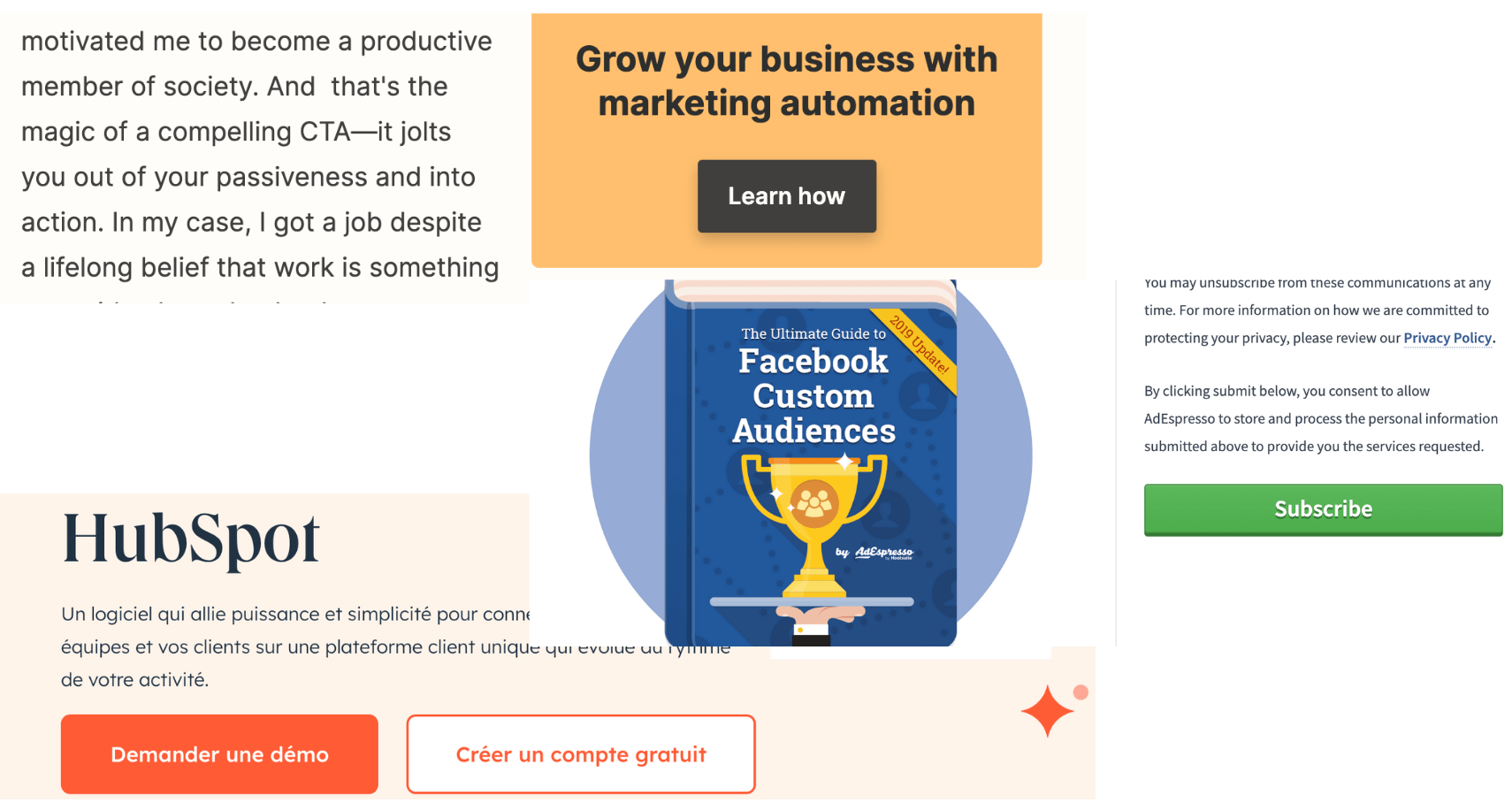
This approach not only builds valuable leads, but also fosters a relationship with your audience based on trust and mutual benefit. As your audience perceives the value of what you offer, they become more inclined to exchange contact details, paving the way for deeper engagement and, ultimately, conversion.
With well thought-out CTAs, businesses can guide their audience along the desired journey, making each step towards conversion as transparent and inviting as possible.
Offering valuable resources
This strategy is based on the principle of reciprocity. By offering something of value upfront, such as e-books, white papers or access to webinars, companies can effectively encourage potential customers to engage further by providing their contact details.
Not only do these resources act as a gateway for establishing initial communication, they also position the brand as a valuable source of knowledge and expertise in its field.
As a result, this approach not only improves lead generation efforts, but also builds trust and credibility with the target audience, laying the foundations for a fruitful relationship.
Organise webinars or podcasts
Webinars and podcasts are powerful tools in the lead generation arsenal, allowing companies to delve deeper into topics of interest, demonstrate their expertise and add considerable value to their audience.
By asking participants to register or offering exclusive resources in exchange for their contact details, these platforms create a direct channel for capturing high-quality prospects interested in the specific knowledge or solutions provided by the company.
Not only does this improve the audience's understanding of and trust in the brand, it also facilitates a more personalised follow-up strategy, enabling businesses to effectively nurture these potential customers. The interactive nature of webinars and the convenience of podcasts make them particularly appealing, helping businesses to stand out and maintain a connection with potential customers in a crowded digital environment.
Email marketing: creating an email list
E-mail marketing remains one of the most effective strategies for maintaining contacts and encouraging conversions. By encouraging your audience to subscribe to your newsletter, you're not just growing your email list; you're creating a community of people who are interested in what you have to offer.
This direct line of communication allows you to provide tailored content that addresses the specific needs and interests of your audience, helping you to better understand your target market.
Delivering quality content via email keeps your audience engaged over time, turning initial interest into lasting loyalty. It's a continuous cycle of learning and adapting to your audience's responses, which in turn refines your marketing strategies and produces better quality leads.
The key to successful e-mail prospecting lies in the value you bring to your subscribers. Relevant, high-quality content that educates, entertains or solves a problem can significantly increase open and engagement rates. This approach not only positions your brand as an authority in your industry, but also ensures that your subscribers look forward to your next email.
Over time, this ongoing engagement paves the way for prospects to become customers, as your audience begins to trust and value the information provided by your brand.
By leveraging email marketing effectively, businesses can cultivate a list of high-quality, conversion-ready leads, which underlines the importance of understanding and responding to the specific needs of your target audience.
Using AI to improve lead generation
Using AI tools to generate leads via content and blogs is an innovative way of captivating and converting your target audience. Vitamin AI, for example, illustrates the power of artificial intelligence in creating content that not only captures the interest of readers, but also optimises the lead generation process.
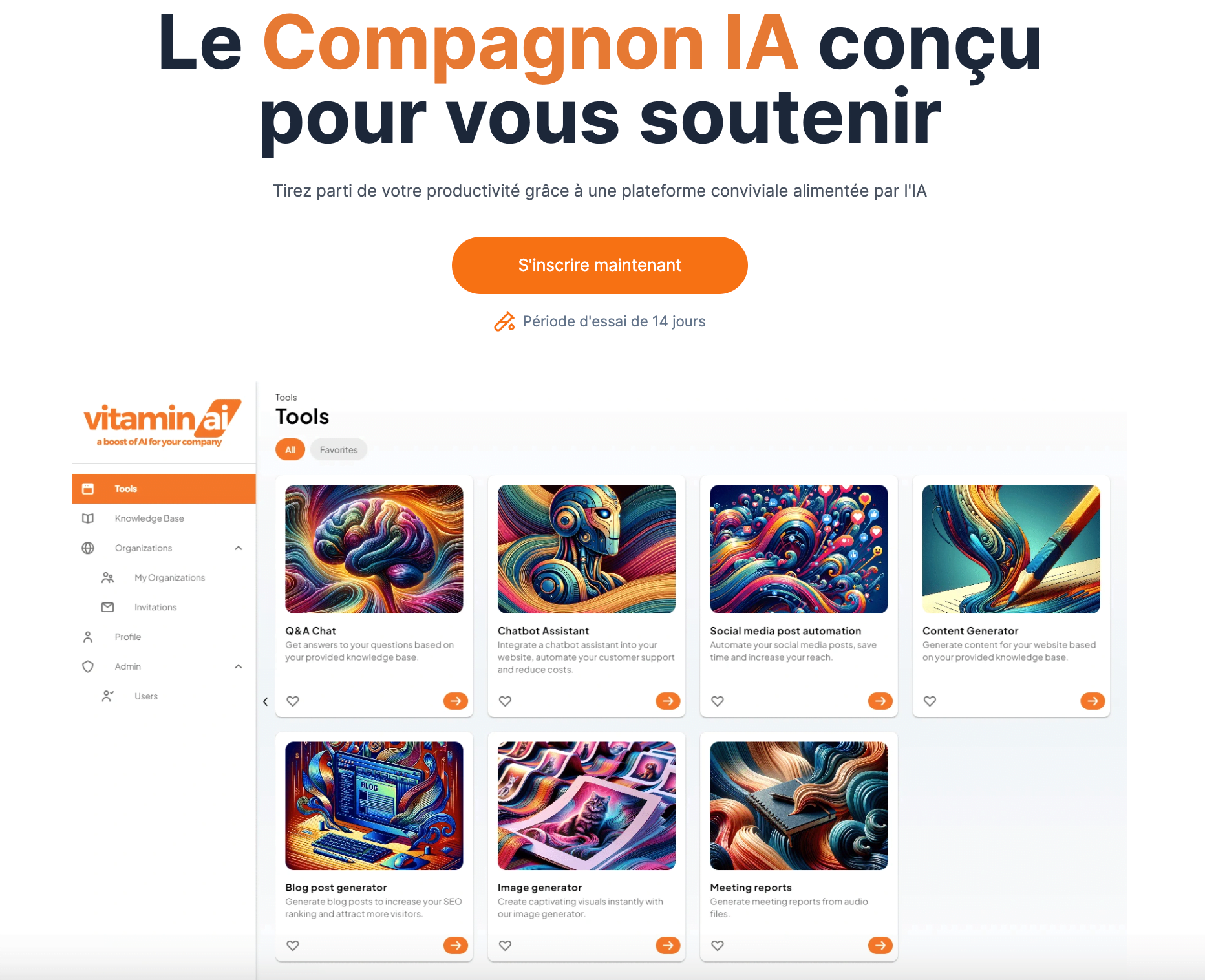
By using AI-based analytics, businesses can gain a deeper understanding of their audience's preferences and pain points, allowing them to create bespoke content that resonates and prompts action. This personalised approach not only improves the user experience, but also significantly increases the chances of converting readers into potential customers.
Are you looking to implement AI tools for lead generation in your business activities? Contact our experts to find the right solution for your business.
Case studies : Successful lead generation strategies using content and blogs
Case study 1: Moz
Presentation: Moz, a company renowned for its SEO software and tools, has used its blog to improve lead generation and establish its authority in the sector.
Strategy: Moz focused on producing rich educational content aimed at beginners and advanced users of search engine optimisation. Their strategy included detailed blog posts, how-to guides and the popular «Whiteboard Friday» video series. Each piece of content was designed to address specific questions, challenges and trends within the SEO community, strategically incorporating keywords to improve search engine visibility. Moz also encouraged community engagement through social commenting and sharing, increasing the reach and impact of their content.
Results : Moz's holistic approach to content has significantly increased its online visibility, driving more organic traffic to its site and increasing lead generation. Moz's commitment to providing useful and actionable content has not only attracted a large audience of SEO professionals and enthusiasts, but has also strengthened Moz's reputation as a trusted source of SEO knowledge and tools. The company's success in content marketing and blogging has played a key role in its growth and the development of a loyal customer base.
Case study 2: Buffer
Presentation: Buffer, a social media management tool, has used its blog to significantly increase its user base and lead generation efforts.
Strategy: Buffer's strategy was focused on sharing valuable information, tips and comprehensive guides to social media marketing. The company focused on producing scalable content that continues to attract visitors long after it has been published. Buffer has improved its strategy by including practical advice and real-life examples, making its content both informative and understandable. They have frequently updated older articles to keep them relevant, improving their search engine rankings over time.
Results : Through consistent, quality blogging, Buffer has seen a significant increase in website traffic and lead generation. Their transparent approach to sharing company metrics and marketing strategies on social media has attracted a loyal following, establishing Buffer as an authoritative voice in the social media industry. This content-focused strategy has helped Buffer not only attract new leads, but also convert them into customers and brand advocates.
Measuring the success of your lead generation strategy
Tools for measuring success
By using these tools effectively, you can find out exactly how visitors interact with your site, what content has the greatest impact and where your conversions come from.
Google Analytics provides a comprehensive overview of user traffic and engagement, HubSpot specialises in effective inbound and outbound marketing. SEMrush excels in keyword and SEO analysis.
Together, they provide you with the data you need to refine your lead generation strategies, optimise content and tailor your approach to meet the needs of your audience more precisely, ensuring a more targeted and successful marketing effort.
Key performance indicators (KPI)
The choice of’key performance indicators (KPI) enables you to clearly assess the extent to which your lead generation strategies are aligned with your business objectives. Tracking the number of new prospects allows you to assess initial interest, while conversion rates reveal how effectively these prospects are turning into customers.
Cost per lead and return on investment (ROI) give an idea of the financial effectiveness of your tactics.
By analysing these indicators, companies can make informed decisions, refine their strategies and optimise their marketing efforts to improve their performance and profitability.
In conclusion, mastering lead generation requires a strategic approach, high-quality content and ongoing optimisation. With this guide, you're well on your way to generating more leads and growing your business.
To find out more about lead generation, read the following articles:
- Revolutionising lead generation: Harnessing AI for your business
- Mastering the art of lead generation : Strategies for your website