

Welcome to our article on intranets! In the digital age, intranets have become increasingly important for organisations to streamline communication, collaboration and productivity. In this article, we'll define intranets and explore their advantages and disadvantages. We will then look at various uses and examples. We'll also look at the difference between intranets and extranets.
Whether you're a business owner, manager or employee, read on to find out more about the benefits of intranets and how they can improve your organisation's workflow and productivity.
What is an intranet?
An intranet is a private network used within an organisation to facilitate communication, collaboration and access to internal resources such as documents, data and applications.
It is generally only accessible to employees of the organisation. It is often built using the same technology as the Internet.
Intranets are often customised to meet the specific needs of an organisation. They can also include features such as news and announcements, employee directories, project management tools and forums for discussion and information sharing.
By centralising access to internal resources, an intranet can help to improve productivity, streamline workflows and strengthen communication within an organisation.
Benefits of an intranet
Here are some of the advantages of using an intranet:
- Centralised communication and collaboration Intranets provide a centralised platform for communication and collaboration between employees within an organisation. By offering employees a single place where they can access company resources, collaborate on projects and share updates, intranets can improve productivity and reduce communication errors.
- Access to internal resources Intranets can provide employees with access to internal resources such as documents, data and applications. By centralising this information, employees can easily find the information they need to do their jobs more effectively.
- Improving safety Intranets are generally only accessible to employees of the organisation. This ensures the confidentiality of sensitive information. This can be particularly important for companies that handle sensitive data, such as healthcare providers or financial institutions.
- Support for remote working With the increase in teleworking, intranets can help employees stay in touch and involved with the business. By centralising access to company resources, employees can keep abreast of important information and remain productive wherever they are.
- Profitability Intranet: Implementing an intranet can be a cost-effective solution for businesses, especially when compared with other communication and collaboration tools. Intranets can be customised to meet the specific needs of an organisation and can be scaled up or down depending on the size of the business.
- Be independent Some solutions on the market can enable you to create an intranet/wiki dedicated to your company. But what happens if this solution is attacked and loses all your company's information? If it goes bankrupt and shuts down its services? If it decides to triple its costs overnight? By developing your own intranet solution, you don't have to worry about these problems.
Disadvantages of an intranet
Despite the advantages, there are also disadvantages to using an intranet. Here are just a few of them:
- User adoption One of the biggest challenges facing intranets is user adoption. If employees don't see the point of using the intranet, there's a risk that they won't use it. This can limit the benefits it offers.
- Maintenance and support Intranets require ongoing maintenance and support. Companies need to ensure that they have the necessary resources to support and maintain the platform.
- Safety risks Intranets can be vulnerable to security risks, such as hacking or data breaches. Companies need to ensure that the intranet is secure and can meet corporate compliance requirements.
- Obsolete information Intranet content can quickly become obsolete if it is not regularly updated. Companies need to ensure that intranet content is up-to-date and relevant.
Examples of using intranets :
- Communication An intranet can be used to communicate company-wide announcements, updates and departmental information. For example, a company might publish updates on a new product launch. It can also share information about upcoming events or meetings, and provide a platform for employees to ask questions or give feedback.
- Collaboration An intranet can be used to facilitate collaboration between employees. For example, employees can use the intranet to share documents, work together on projects and access internal resources such as templates, guidelines and forms.
- Access to internal resources Intranet: An intranet can provide employees with access to internal resources such as policies, procedures, forms and other information needed to do their jobs effectively. For example, a company might use the intranet to provide access to employee benefits information, training resources and company-wide announcements.
- Corporate culture An intranet can be used to promote corporate culture by sharing company news, recognising employee achievements and providing a platform for social interaction between employees. For example, a company can use the intranet to publish photos and stories of employee events, share employee awards and provide access to employee social groups.
- HR functions An intranet can be used for a variety of HR functions, such as employee induction, training and performance management. For example, a company can use the intranet to post job vacancies, share HR policies and procedures and provide access to benefits information.
- Knowledge management An intranet can be used as a knowledge management platform, enabling employees to share and access knowledge and expertise from across the business. For example, a company can use the intranet to create a knowledge base of frequently asked questions, share best practice and provide access to training resources.
- Document management An intranet can serve as a centralised location for document management. This makes it easier to store, organise and share files within the organisation. For example, a company can use the intranet to create a centralised repository for marketing documents, sales materials and other documents used throughout the organisation.
- Project management Intranet: An intranet can also serve as a platform for project management, providing a centralised location for tracking project progress, assigning tasks and collaborating with team members. For example, a company can use the intranet to create a project management dashboard, share project schedules and milestones, and provide access to project-specific resources.
What is the difference between an intranet and an extranet?
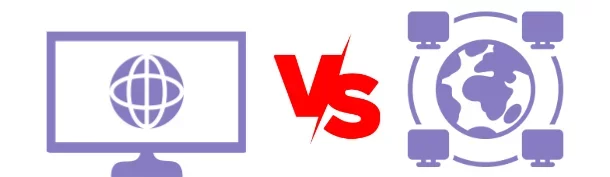
Intranets and extranets are both private networks used within an organisation. However, there are some key differences between them.
A intranet is a private network accessible only to employees of the organisation. It is designed to facilitate communication, collaboration and access to internal resources. Access to an intranet is generally via a company's internal network, using a private VPN for remote workers. In addition, it is inaccessible from outside the organisation.
On the other hand, a extranet is a private network accessible both by the organisation's employees and by external partners, suppliers or customers. An extranet can be used to facilitate communication and collaboration between an organisation and its external partners, by providing a secure platform for sharing information and resources.
While intranets and extranets are both private networks, the main difference is that intranets are only accessible to employees of the organisation, while extranets are accessible to external partners, vendors or customers. In general, intranets are used for internal communication and collaboration, while extranets are used for external communication and collaboration with partners outside the organisation.
Conclusion
Today's question was “Is creating an intranet a good idea in 2023? In this article, we have shown that creating an intranet in 2023 could be a good idea for companies that want to improve their communication, collaboration and productivity.
With teleworking becoming increasingly common, intranets can provide a centralised platform for employees to access company resources and keep in touch with colleagues.
Intranets can also help companies streamline workflows, improve knowledge management and enhance the employee experience. By providing a centralised place for communication, collaboration and access to internal resources, intranets can help improve productivity and reduce miscommunication within an organisation.
However, creating an intranet requires knowledge and resources. Companies need to ensure that they have the resources to support and maintain the intranet, and that employees see the value of using it.
Want to know how to choose the right web agency? Click on the following link to find out: How do you choose a web agency for your SME?
Need to develop your intranet?