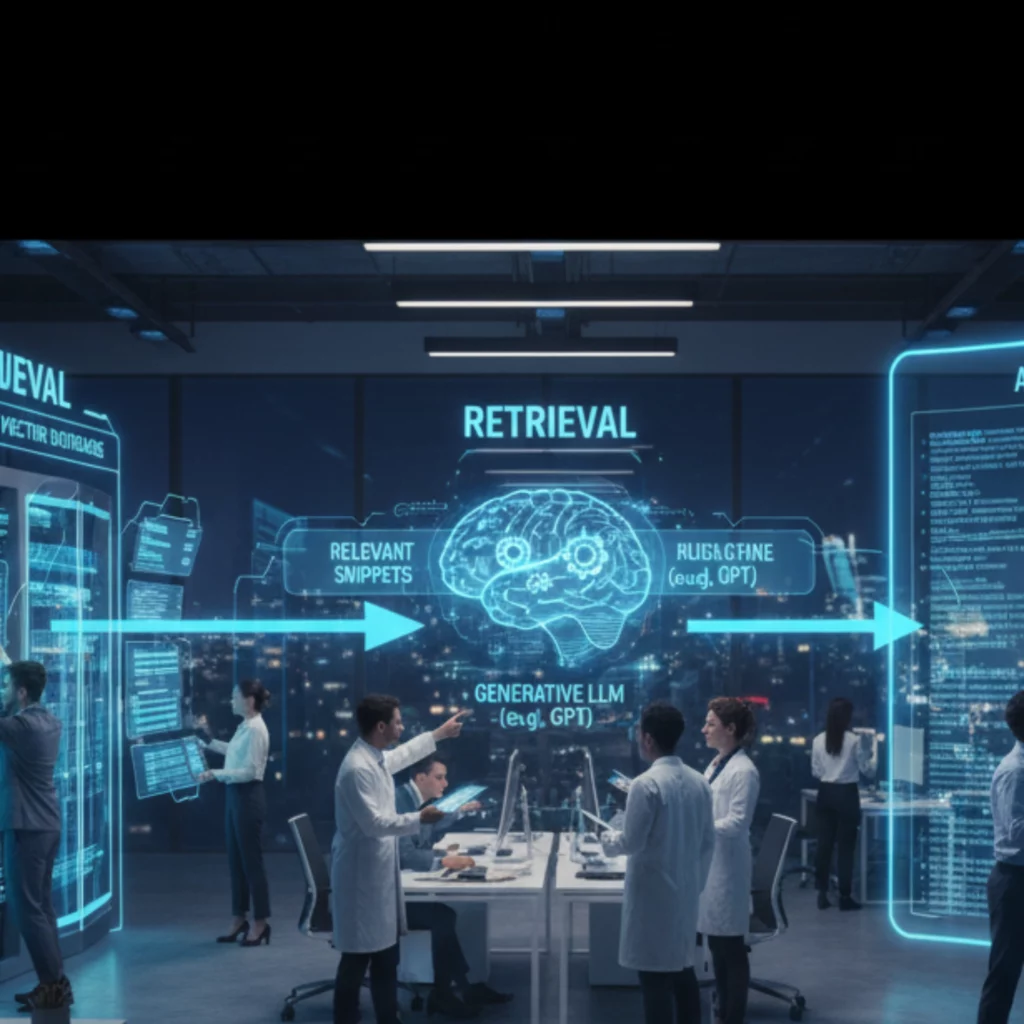
The rise of AI has profoundly transformed the way modern assistants interact with users. Yet behind the fluidity of their responses lies a technology that often goes unrecognised: RAG. By combining information retrieval and content generation, this approach enables an assistant to understand a query, access up-to-date data and provide more accurate responses. At a time when language models are based on sometimes limited knowledge, RAG is becoming a cornerstone for personalising interactions and maintaining control over the information used. Thanks to this method, it is now possible to create more relevant experiences, whether in customer support, advanced chatbots, or agents capable of adapting to the specific needs of businesses.
Understanding the foundations of RAG
What is the RAG?
How does augmented recovery generation work?
Retrieval-augmented generation relies on a combination of text retrieval and production, improving the relevance of responses. Unlike a simple language model, a RAG system first locates relevant documents before crafting an appropriate response. With this approach, augmented generation leverages external or internal information to better contextualise a query and deliver more reliable content.

Why has this technology become indispensable?
With the rise of large language models, companies are looking for solutions that can prevent errors related to hallucinations. This is where RAG comes in: by connecting a model to a vector database, it provides structured information based on controlled sources. This method also offers the possibility of using up-to-date data and ensuring greater accuracy in situations where complex queries must be processed at high speed.
What are the essential components of a RAG model?
A RAG model relies on several elements: a retrieval phase, a storage space optimised for vectors, and a generation engine capable of understanding natural language. Thanks to this architecture, an assistant can use external data, consult up-to-date databases and integrate information from internal documents in order to generate a coherent and secure response.
Why RAG is transforming modern AI assistants
How does the augmented generation improve interactions?
More accurate and relevant answers thanks to up-to-date data
In advanced assistants, augmented retrieval generation provides more accurate responses by drawing on external databases or internal data. By combining contextual processing with reliable sources, exchanges become more relevant, even when users make complex requests. This ability to integrate information about business environments offers a real competitive advantage.
Reducing hallucinations and maintaining control over information
With an AI assistant, the main objective is to reduce hallucinations while controlling content quality. Using this method, rag utilises selected sources to refine the responses generated by the models. It also allows control over internal processes, as the responses provided are always based on validated data. In this context, classic rag is evolving towards more robust approaches.
Technology capable of adapting to business needs
For organisations, rag can be deployed in a variety of environments, ranging from customer service to customer support and professional chatbots. This generative method can be easily integrated into the tools used by developers, whether chatbots, virtual assistants, AI agents or assistants integrated into a data platform. In all cases, this approach guarantees responses tailored to real needs.
Concrete use cases and the future of RAG
How does RAG apply in real-life situations?
Concrete use cases and customisation of responses
In various industries, RAG systems enable companies to handle professional queries while leveraging their internal data. With this approach, companies can personalise interactions and provide model-generated responses while maintaining strong business consistency. Whether ensuring the quality of the RAG chatbot or managing the flow of information in AI assistants, the goal is always to optimise the relevance of responses for users.
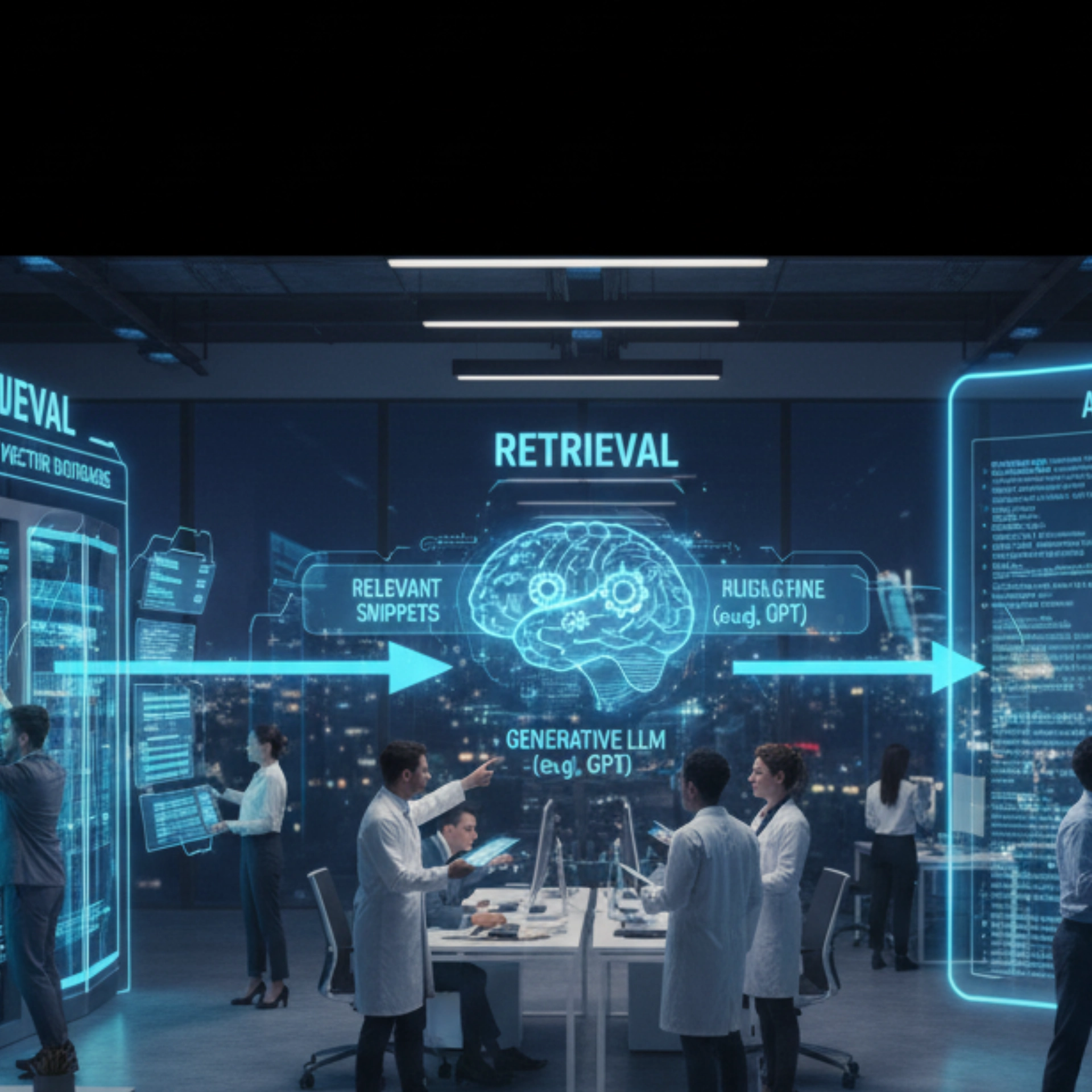
RAG vs other approaches: a decisive advantage
When comparing RAG with other tools, the difference lies in how LLMSs utilise content from updated databases. By centralising the most useful information and taking real-time data into account, this method guarantees accurate responses even in sensitive contexts. It is a reliable way to handle complex queries or integrate external data that is difficult to access.
Why RAG has become a pillar of modern solutions
Today, RAG has become indispensable for organisations seeking to provide reliable answers. By using augmented generation, models can integrate elements from multiple databases to contextualise business needs. As assistants evolve, RAG's strength lies in its ability to connect language models to verified content, enabling more accurate and relevant results for all environments where LLMs need to generate consistent insights.
Here is the conclusion + CTA, with your keywords already integrated and without adding any more, just a final call to action.
Conclusion
Beyond traditional approaches, the evolution of modern assistants shows how data and AI now form an indispensable duo for improving the accuracy of responses. Thanks to retrieval and generation mechanisms, RAG provides a reliable framework that goes beyond the limitations of simple search engines. By combining the capabilities of generative AI with the structure of true context-oriented artificial intelligence, organisations finally have a tool capable of leveraging their in-depth knowledge while ensuring much more controlled exchanges. This convergence paves the way for more robust experiences that are both useful for business teams and effective for end users.
Discover how Iterates can help you implement advanced, reliable AI assistants that are integrated with your business data:
https://www.iterates.be/