You're probably wondering what a minimum viable product is? Then you've come to the right place. In a nutshell, a minimum viable product (MVP) is a concept that has become increasingly popular in recent years for startups and product development teams. In this comprehensive guide, you'll see a full explanation of an MVP. Then, we'll provide you with examples of MVPs to help you understand the concept. In addition, we will discuss how to develop an MVP using Agile methodology.
We will also look at the advantages and disadvantages of this product.
So if you want a full explanation of MVP, read on!
MVP: definition
MVP stands for “Minimum Viable Product”. It is a term commonly used in product development, particularly software. It is the basic version of a new product that is put on the market in order to validate its use and demand.
This product is designed to solve the main problem for which it is intended, with as few features as possible.
The MVP concept is an essential aspect of the Lean Startup methodology developed by Eric Ries. It emphasises experimentation to validate business hypotheses.
To understand the full meaning of MVP, let's look at some examples.
Examples of minimum viable products
Here are some common examples of minimum viable products in various sectors:
- Zappos - The Zappos MVP was a simple website listing shoes for sale... from a local shop near founder Anthony Hsieh's flat. The company had no products in stock! For each order, the founder went to the shop to buy the pair of shoes ordered. The website enabled the company to test the demand for its service before setting up a full e-commerce platform.
- Airbnb - Airbnb's MVP was a website that featured photos and information about hosts' living spaces. The founders did the research on the hosts. They took the photos of the flats themselves. The business is not scalable. This is often the case with MVPs. The website enabled the company to test the demand for its service before building a complete platform.
- Uber - Uber's MVP was a simple website that allowed users to request a ride from a nearby driver. The website allowed the company to test the concept and gather feedback from users before creating the full application. The main features included in the initial version of the Uber app were:
- registration and login
- race request
- putting you in touch with a driver,
- real-time race tracking
- payment and feedback from the user.
These basic functions were enough to prove the viability of the concept and attract the first users.
- Instagram - Instagram's MVP was a simple photo-sharing application with a few basic filters. This application allowed the company to test the concept. They gathered feedback from users before adding other features.
How do you develop an MVP using Agile methodology?
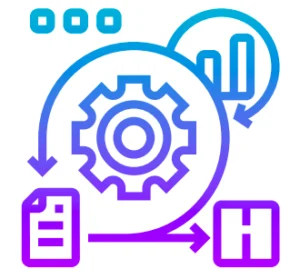
Developing an MVP using Agile methodology is one of the most popular methods for developing this type of product. This is because it is possible to iterate on the basis of user feedback and the latest information on the market. Developing an MVP using Agile methodology involves dividing the product development process into short cycles (2 to 3 weeks).
The main steps to follow:
- Identify product objectives - This first stage involves identifying the problem the product will solve, the target audience and the desired results.
- Defining user stories“ - What is a “user story”? It's a short, simple description of a feature or functionality from the user's point of view. It helps the development team to understand the user's needs. What's more, it will tell you how the product can solve the user's problem.
- Prioritising functionalities - The product team needs to prioritise features according to their importance to the user and the value they bring. This involves determining which features are essential for the MVP and which can be added later. This is the most important and difficult part of the process.
- Planning the sprint“ - What is a sprint? A sprint is a short, focused period of development. It generally lasts two to three weeks. During this period, the team must identify the user stories it will be working on during the sprint and estimate the effort required to complete them. Each sprint, or two sprints, should provide new functionalities that can be used by users.
- Developing the minimum viable product (MVP) - During this stage, the development team must work on the user stories identified during sprint planning and develop the minimum viable product (MVP).
- Revision and iteration - After each sprint, the product team should review the MVP and gather feedback from users. This feedback should be used to iterate on the product and improve it during subsequent sprints.
- Repeat the process - The development team must continue to work in sprints, prioritising features and improving the product until it meets the needs of the target audience.
Benefits of the MVP
Here are some of the key benefits you can focus on:
- Reducing risks and costs - An MVP allows you to test your product idea with a minimum investment of time and resources. By focusing on the core functionality needed to deliver value to users, you can reduce the risk of investing in a product that may not succeed in the marketplace.
- Faster time to market - Developing an MVP enables you to bring your product to market quickly. This can be essential in a competitive environment. It can help you get to market ahead of your competitors and start generating revenue.
- Validation of hypotheses - An MVP allows you to test your assumptions about your product idea and validate the existence of market demand. By gathering feedback from users, you can develop the product further and ensure that it meets the needs of the target audience.
- Faster iteration and improvement - Developing an MVP allows you to gather user feedback and iterate quickly on the product. This can help you improve the product over time to add new features and functionality as needed.
- Better use of resources - By prioritising the most important features and objectives in an MVP, you can make better use of your resources. You'll avoid investing time and resources in developing features that aren't necessary or that don't bring value to users. This can lead to a better performing product in the long term.
Disadvantages of MVP
While there are many advantages to developing a minimum viable product, there are also some disadvantages. Here are just a few of them:
- Limited functionality - By definition, an MVP includes only the minimum functionality necessary to deliver value to users. This means that the product may not have all the features that users want at the outset. This can limit its appeal and adoption. But if you really address an important need, you can be sure that users will come back and expect the new features.
- Negative user experience - If an MVP is not developed with care, it can result in a poor user experience. For example, if the user interface is not intuitive or the product is not stable, users may not be satisfied. As a result, they will abandon the product. But that's no problem! It's part of the process. Bad feedback is also useful for improving your product.
- Limited market appeal - An MVP can be developed by focusing on a specific target audience, which can limit its appeal to the market. It can then be difficult to attract new users and develop the product over time. To do this, you'll need to add a new feature, but that's okay because you'll already have validated the presence of a particular target audience and you'll have your first users. You can develop your product with confidence and be on the right track.
- Difficulty attracting investors - Investors may be reluctant to invest in the creation of an MVP because the concept is not yet proven. But once you've built up a certain audience thanks to your MVP, you'll be in a strong position to raise funds: proof of concept, first (paying) users, market data, growth prospects, etc.
Conclusion
Developing a Minimum Viable Product (MVP) can be an excellent way of testing your product idea quickly and efficiently. By focusing on the essential features that bring the most value to users, you can minimise risks and costs in case your product doesn't make it to market. With the Agile method, you can develop your product in iterative cycles and speed up improvements. But don't forget that there are potential drawbacks to developing an MVP.
We hope this article will help you understand the meaning of MVP. We also hope it will help you decide whether this is the right approach for your product idea.
We invite you to read our other article on the same subject: Find the right company to create your MVP in Belgium.
Would you like to create an MVP for your project?