Creating a mobile application When you start with an idea, it can seem vague: “where do I begin? In this transcript, Iterates presents a simple method for transforming an intention into a concrete application, with a clear approach from design to deployment.
Depending on the context, an application can be used to streamline internal processes, improve customer relations, or create a service to offer to customers (B2B) or individuals.
Discover the’mobile application development services at Iterates.
The starting point is not “techno” but a clear approach, with a team that understands your business. The aim: to build a truly useful application, aligned with a concrete use in your company (or for your customers).
General comment: the earlier the requirement is defined, the easier it is to arbitrate on budget, deadline and functionality.
The transcript highlights three typical benefits:
This provides a framework: an app is not “a technical project”, it's an operational or business lever.
Iterates explains that an important step is to choose the technology best suited to your needs. context your target product, your budget and the desired timeframe. The stated objective: a solution efficient and the least expensive possible in this context.
Native applications are dedicated to iOS (Apple) or to Android, with separate development for each platform.
The hybrid makes it possible to a single development instead of two, with a product shared by Apple and Android. The transcript highlights the interest : reduce development costs, but also the costs of maintenance and’evolution.
To find out more about reduce mobile application development costs.
Iterates also mentions the possibility of creating a Progressive Web App Starting with an application that is already accessible via the browser and transforming it into a mobile application that can be downloaded from your site, for example, without going through the iOS/Android stores. The transcript indicates that this can be an interesting way of avoiding certain charges levied by iOS/Android on sales.
General comment: a PWA is often described as a web-based “app-like” experience that can be installed and accessed easily, depending on the need and the distribution strategy.
The strength put forward is the made-to-measure Starting with a blank sheet of paper, based on real use in your company. Based on your constraints and objectives, the team builds an application concept that meets your needs (or those of your customers).
Outsource development of your mobile application by a trusted service provider in complete confidence and benefit from comprehensive support.
After a meeting, Iterates explains that he can :
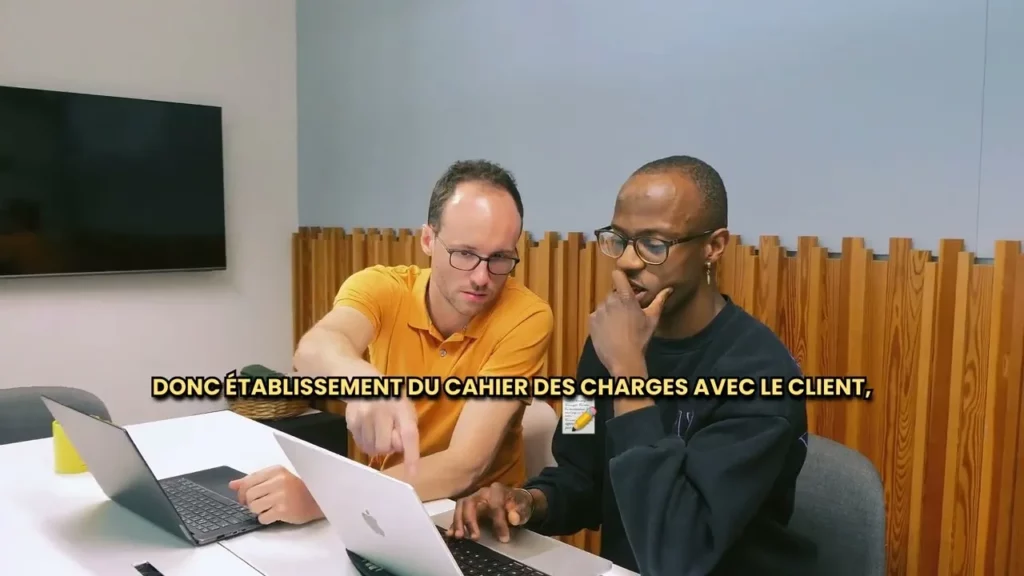
The transcript specifies that the quote is generally product within a week. The advantage of feature-based pricing: you can decide to launch certain features now, and then add others later. shift others for later.
General comment: this type of “now vs. later” trade-off reduces risk by avoiding building everything before validating its use.
The method is announced as simple: start with the design. Iterates produces a model of the future application and says it will be able to functional so that you can use it and see how the app behaves.
The key point: getting you back quickly so that development can get underway and there's no need to get frustrated or go back and forth once the application has been developed.
After the design/feedback phase, development takes place step by step. The transcript mentions a clear rhythm : every fortnight, A series of events to showcase the latest developments in the application.
This allows :
The associated promise: a methodology simple and transparent, To avoid unpleasant surprises and ensure that all the details of the trade are properly covered.
Discover how to apply agile methodology to manage your software projects and improve your deliveries
Iterates explains that you don't need to be an expert: the team develops, tests and deploys the application. It also accompanies the maintenance and the’evolution app.
Guarantee the smooth operation and longevity of your application thanks to a secure hosting and professional maintenance.
The transcript cites three profiles:
If you already have an app and are looking to take it over/improve it, check out the mobile application development recovery service proposed by iterates :
If you have a mobile application project and would like to clarify the idea, obtain specifications and a price estimate, you can contact Iterates :
One exchange, a thousand possibilities.
Describe your vision to us using this form: we'll analyse your request and get back to you within 24 hours with personalised advice and a concrete action plan.
We have the team and the resources to help you with your projects. Give us the details in this form and we'll get back to you as soon as possible to discuss them together.
Start by clarifying the objective and actual use, then choose the appropriate technology (native, hybrid or PWA). A mock-up is then used to obtain rapid feedback before launching development. Find out more about iterates' approach to the mobile application development
The choice depends on the product, the budget, the deadline and the expected level of performance. The hybrid is aimed at a single iOS/Android development, and the PWA can avoid the need to go through the stores in some cases. You can see the difference between a mobile application and a web application here.
Choose a partner who understands your business and starts from real use, with a clear framework and regular feedback. A transparent process (frequent demos, early adjustments) limits unpleasant surprises. If you need help, contact Iterates, the’business app development agency
A useful estimate involves analysing the need, drawing up specifications, then costing by functionality to decide what is needed now or later. To start with a rcontact us to obtain a quote for a mobile application
Yes, the challenge is to secure the takeover, and then to organise development and maintenance over the long term. Find out more about the services offered by iterates at takeover of mobile applications and on application maintenance