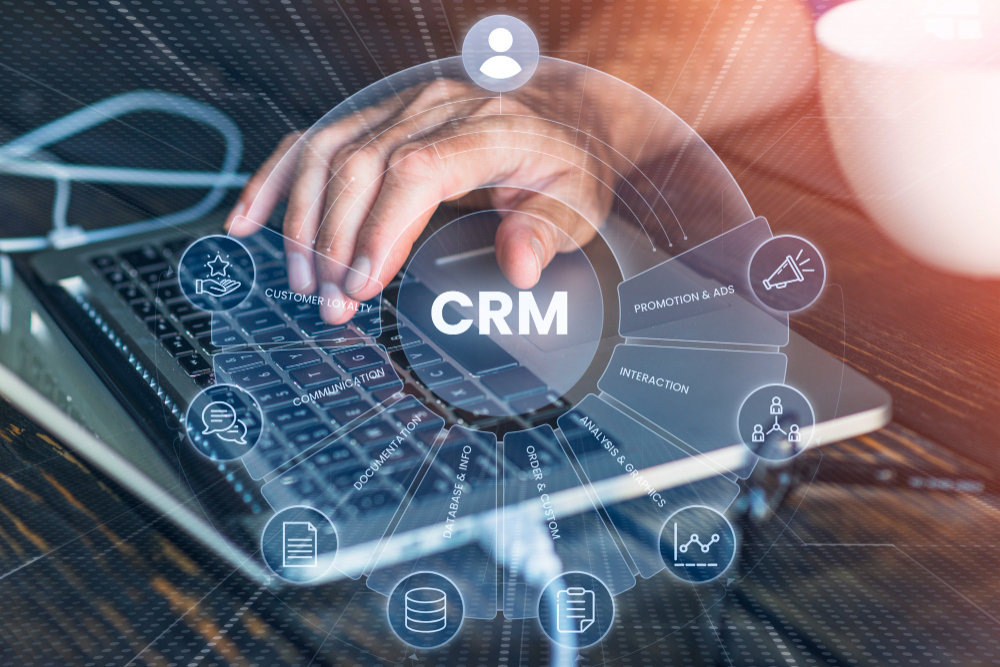
A contact form that sends an email, a visitor who downloads a white paper, a customer who places an order: every interaction on a website generates data. Without a link between the website and CRM, this information remains in silos, has to be re-entered manually or is simply lost. Linking these two tools transforms a showcase website into a genuine sales driver. This is why this integration should be a priority, rather than a secondary technical option.
What happens when the website and the CRM system don’t communicate with each other
Without integration, every lead generated on the website must be entered manually into the CRM by a member of the sales or marketing team. This step, which may seem trivial at first glance, has a tangible impact on sales performance.
Leads that are lost or dealt with too late
A form completed on a Friday evening can wait until Monday morning before being forwarded to the relevant sales representative. In a context where the response time to a lead is directly linked to the conversion rate; this delay represents a business opportunity that slips away. An automated connection between the website and the CRM system eliminates this downtime.
Incomplete or duplicate data
Manual re-entry leads to errors: typing mistakes, duplicate entries, and missing fields. Over time, the CRM database becomes corrupted, making it more difficult to target marketing campaigns and skewing key sales performance indicators.
What website–CRM integration actually achieves
Link the website to a Custom CRM opens up possibilities that go far beyond simply submitting a contact form. It is the visitor’s entire journey that becomes actionable.
Centralise customer data in real time
Every form, every request for a quote, and every newsletter subscription automatically feeds into the Custom CRM across the organisation, with real-time synchronisation. This gives sales staff a comprehensive and up-to-date view of each prospect, without having to consult several separate sources of information.
Automating sales and marketing follow-up
Once the data has been centralised, it becomes possible to trigger automated workflows: welcome emails, follow-ups after an unanswered quote request, and the segmentation of prospects based on their behaviour on the website. These automated processes transform tasks that were previously carried out manually into reliable processes that run continuously, without human intervention.
The specific case of e-commerce websites
For an e-commerce site, integration with the CRM is of even greater strategic importance. Every order, every abandoned basket and every purchase history provides valuable data for personalising the customer relationship.
Synchronise stock levels, orders and customers
A online shop Integration with the CRM system enables real-time synchronisation of stock levels, orders and customer records, eliminating the need to re-enter data between the sales platform and sales management tools. This centralisation reduces stock errors and speeds up order processing.
Personalise the shopping experience
With purchase history centralised in the CRM, it becomes possible to offer personalised recommendations, targeted loyalty offers or follow-ups tailored to each customer’s profile, rather than generic campaigns sent to the entire customer base.
Choosing the right CRM for integration
Not all CRM solutions are equal when it comes to ease of integration, regulatory compliance and data sovereignty – an issue that is playing an increasingly important role in the decision-making of European SMEs.
General-purpose CRM or bespoke solution
Consumer-facing CRM systems (Salesforce, HubSpot) offer rapid integration via standard connectors, but impose their own operational logic. For specific business requirements, bespoke development or a solution such as Odoo allows for more seamless integration with the website, without having to work around the limitations of a generic tool. The European sovereign CRMs Solutions such as Odoo and SuiteCRM are gaining ground amongst SMEs concerned about GDPR compliance and independence from US suppliers.
Check technical compatibility before committing
Before choosing a CRM, it is worth checking whether an open API is available. The more the tool exposes its features via a well-documented API, the quicker and more stable the integration with the website will be over time, without relying on unreliable third-party connectors.
Extending integration beyond the website
A website linked to a CRM system is often just the first building block in a wider ecosystem. Companies that structure their digital transformation around a central CRM system gradually integrate other internal tools into it.
Connect the CRM to internal tools
Beyond the public website, a bespoke customer portal or intranet can draw on the same data centralised in the CRM, offering internal teams and customers a consistent experience across all of the company’s digital touchpoints.
Building a unified view of the customer
The ultimate aim is to gain a 360° view of each customer: their interactions on the professional website, their interactions with customer support, their order history and their preferences. This unified view, made possible by the integration of the website and the CRM system, becomes a competitive advantage that is difficult for competitors who still use disconnected tools to replicate.
Connect your website to your CRM with iterates
iterates designs bespoke integrations between websites, applications and CRMs for SMEs in Brussels, whether it’s a showcase website, an online shop or a complex business platform. The aim is to eliminate the need for data re-entry, ensure data reliability and provide your sales teams with a clear and actionable overview of each prospect.